The Morocco flag: 10 more interesting things than you imagine.
A National Emblem of History and Spirit
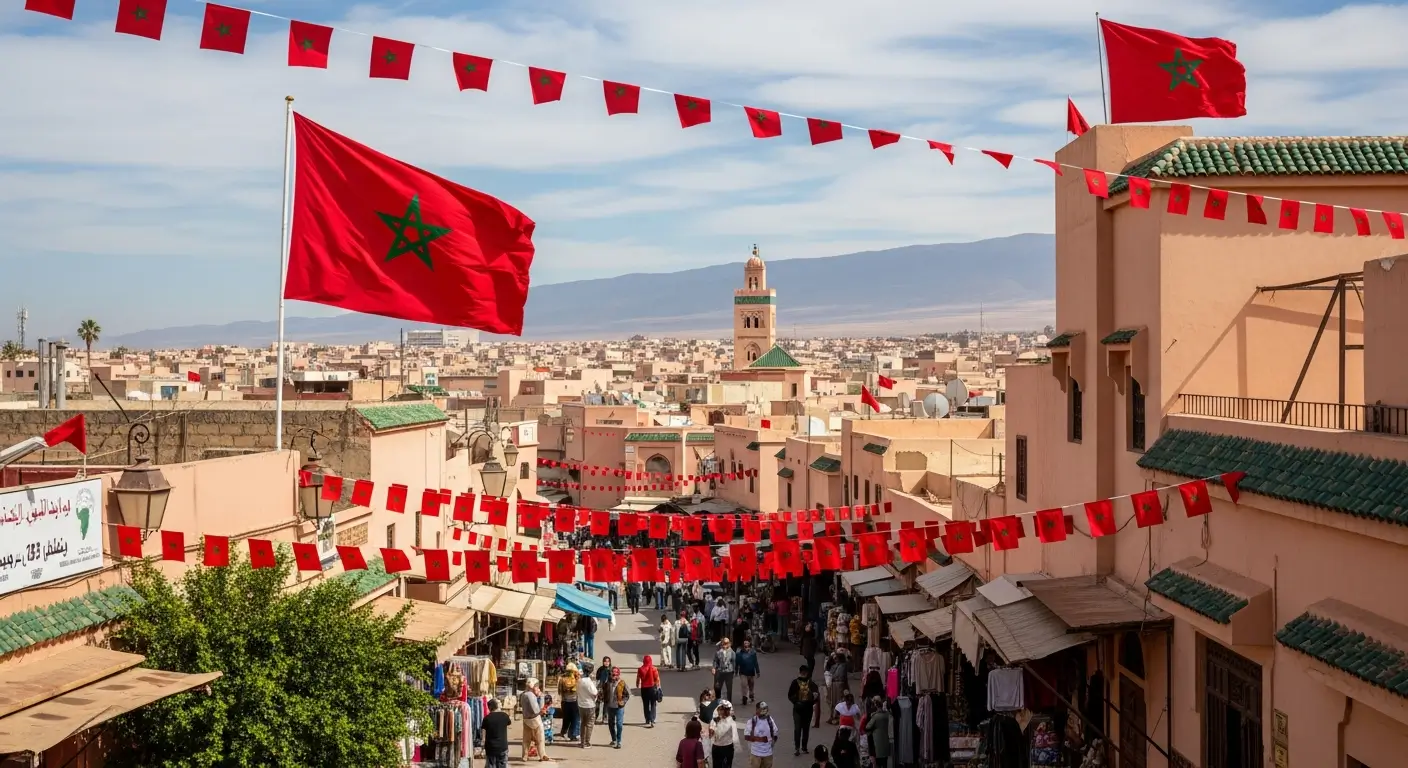
So here’s the thing about the morocco flag—it’s not just some random colors slapped together. This bad boy tells a whole story about centuries of history, deep religious meaning, and a country that somehow manages to be both ancient and totally modern at the same time. When you spot that bold red flag green star morocco design flying over a busy marketplace, a quiet desert spot, or even a hip café in Casablanca, you’re looking at something that really captures Morocco’s soul.
The moroccan national flag is pretty straightforward when you first see it: there’s this striking red background and a green five-pointed star right in the middle (fancy people call it the Seal of Solomon). But trust me, there’s way more going on here than meets the eye. The morocco flag meaning connects to Islam, royal dynasties, and all the struggles Moroccans went through to win their independence. Whether you’re a flag nerd, planning a trip, or just randomly curious, this thing’s got layers.
Table of Contents
Vexillological Specifications: The Official Design Standard
Okay, I know “vexillological” sounds super fancy (it just means “flag stuff”), but stick with me because the technical details are actually kind of cool.
The Mandated Flag Ratio and Construction
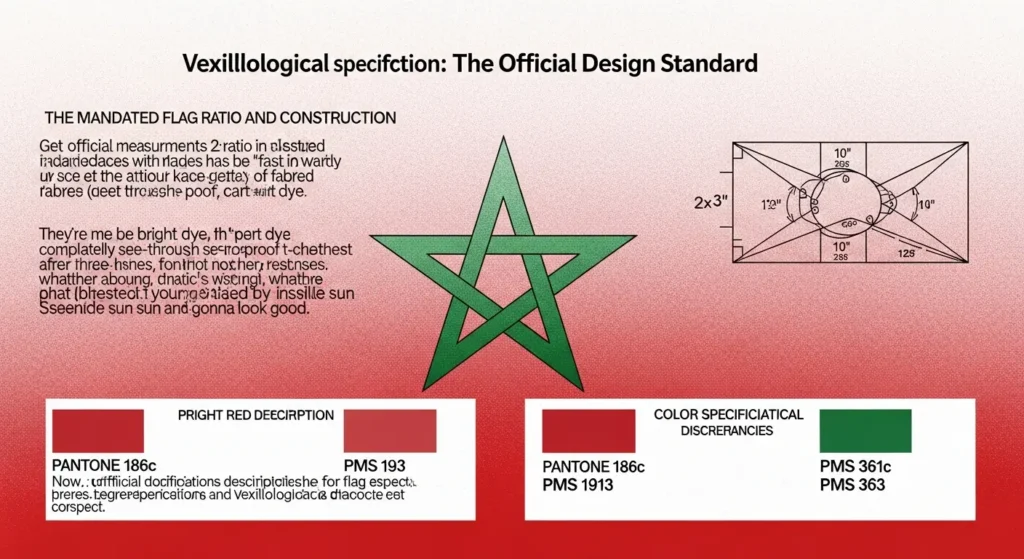
The official measurements come in at a 2:3 ratio—basically a nice, balanced rectangle. And get this: Moroccan law actually says the fabric has to be “fast” dye (meaning it won’t fade like your favorite t-shirt after three washes). It’s gotta be bright red, completely see-through-proof, and rectangular. They’re not messing around—whether that flag’s getting blasted by Sahara sun or ocean spray in Essaouira, it’s gonna look good.
Precise Geometry of the Green Pentagram
Here’s where it gets really nerdy in the best way. That green star isn’t just randomly placed—it’s inscribed in an invisible circle that’s exactly one-sixth of the flag’s length. The star’s center sits right where the flag’s invisible diagonal lines cross. Each point of the star is super specific too: the width is one-twentieth of its length, and one point always faces straight up. It’s like someone with serious OCD designed this thing, and honestly? Respect.
Color Specifications and Vexillological Discrepancies
Now, the official descriptions just say “bright red” and “palm green,” which sounds simple enough. But flag experts have found some interesting quirks—some documents list the red as Pantone 186c, others say PMS 193. Same deal with the green: is it PMS 361c or PMS 363? Nobody can totally agree. It’s like when you’re trying to paint your living room and the color looks different depending on which paint store you go to.
The Striking Red Field: A Legacy of Dynasties and Valor
That bold red background? Yeah, it’s got some serious history behind it.
The Alaouite Dynastic Tradition
The red comes from the Alaouite dynasty, which has been running things since the 1600s. And we’re not talking about just any royal family—these folks trace their family tree all the way back to Prophet Muhammad himself. That’s some serious credentials. The red banner’s been flying over Morocco through good times and rough patches, basically connecting everything from way back then to right now.
Symbolism of Courage, Strength, and Sacrifice
But it’s not just about royalty. That crimson represents courage, toughness, and straight-up bravery. It’s also about the blood Moroccans shed fighting for independence—battling colonial powers until they finally got their freedom in 1956. So yeah, every time you see that red, it’s a reminder of sacrifice and a symbol of national pride and sticking together no matter what.
Cultural Manifestation: Red in the Moroccan Landscape
Here’s something cool: the flag’s red actually shows up in real life. Ever heard of Marrakech being called the “Red City”? That’s because the buildings are made from this gorgeous terracotta clay and sandstone, that’s basically the same color as the flag. Walking around the old medina feels like you’re inside the flag itself—everything’s this warm red-orange. It’s pretty trippy and totally Instagram-worthy.
The Central Green Star: Faith, Unity, and the Seal of Solomon
That green star in the middle of the red flag Morocco? It’s packing way more meaning than you’d guess.
The Theological Foundation: The Five Pillars of Islam
Each of the five points represents one of the Five Pillars of Islam—basically the core practices that define Muslim life:
Shahada is the declaration of faith (the “there is no god but God” part). Salat represents the five daily prayers that structure the whole day. Zakat is about giving to charity and helping people out. Sawm symbolizes fasting during Ramadan (and yes, that includes not even drinking water during daylight hours—intense!). Hajj is the pilgrimage to Mecca that Muslims try to do at least once if they can.
So basically, the flag is like wearing your faith on your sleeve, but for a whole country.
⭐ Try this: Marrakech to Merzouga New Year’s Eve Desert Tour
The Significance of Green in Islamic Tradition
Green isn’t just a random choice—it’s THE color in Islamic tradition. It represents paradise, hope, wisdom, and peace. It’s connected to Prophet Muhammad and his family, so it carries major respect. When you put that green against the red background, you’re getting this powerful combo of faith and sacrifice all wrapped up together.
The Seal of Solomon (Pentagram)
The star shape is called the Seal of Solomon, which is this ancient symbol about protection, unity, and the connection between God and the nation. If you look closely, it’s actually two triangles overlapping—one pointing up to heaven, one pointing down to earth. It’s all about how the spiritual and physical worlds meet. You’ll see this pattern everywhere in Morocco, from the crazy-detailed tile work in Marrakech courtyards to the carved wooden ceilings in Fes. Once you start noticing it, you can’t stop.
A History of Change and Pan-Arab Context
The morocco flag didn’t always look like this—it’s got an evolution story.
From Plain Red Banner to National Emblem (Pre-1915)
Up until 1915, Morocco’s flag was just… plain red. That’s it. No star, no nothing. But when the French protectorate showed up, they needed something to tell Morocco’s flag apart from all the other red flags out there. So Sultan Moulay Youssef was like, “Let’s add a green star,” and boom—modern Moroccan flag was born.
Contextualizing the Flag in Pan-Arab Vexillology
This is where things get historically interesting (bear with me). The green actually goes way back to the Fatimid Dynasty, which started in Morocco and spread across North Africa. It symbolized loyalty to Ali, the Prophet’s cousin. Morocco’s five-pointed star (for the Five Pillars) is different from some other Islamic flags that use seven-pointed stars (representing the seven verses of the first chapter of the Qur’an). So even among Arab and Islamic flags, Morocco’s got its own vibe.
The Flag in the Fight for Sovereignty
When Morocco finally kicked out the colonizers and got independence in 1956, they kept the flag instead of making a new one. That choice meant something—like saying, “This is who we’ve always been, and now we’re free to be it fully.” The flag got especially famous during the 1975 Green March, when about 350,000 Moroccans just walked into the Western Sahara carrying flags and Qur’ans. No weapons, just peaceful assertion of “this is ours.” Pretty powerful stuff.
The Flag’s Role in Moroccan Life and Travel
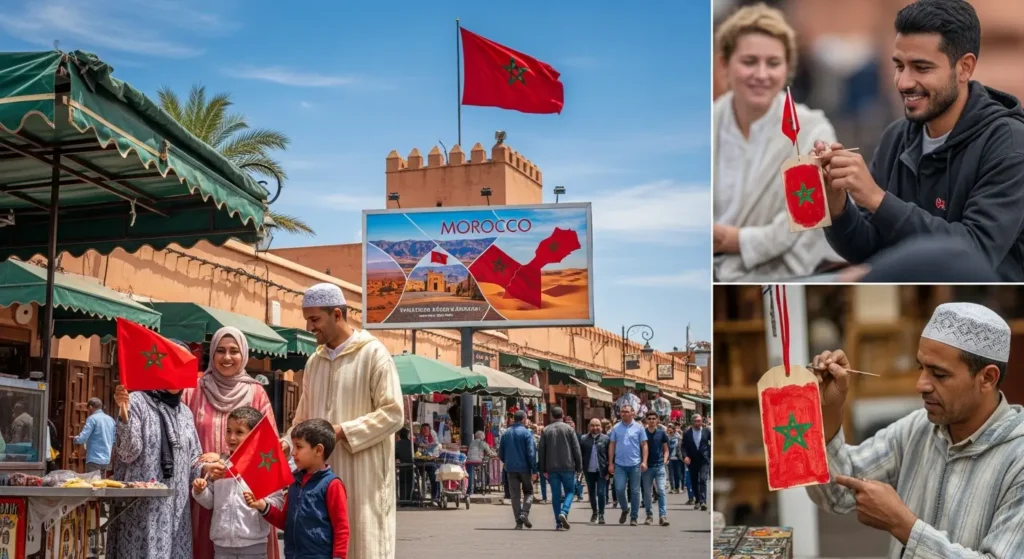
The moroccan national flag is everywhere in Morocco, and I mean everywhere.
Cultural Integration and Celebrations
You’ll see it on government buildings, sure, but also at random little shops, hanging in people’s homes, at weddings—it’s genuinely a part of daily life. When there’s a wedding with one of those all-inclusive packages, you can bet there’ll be flag decorations. National holidays like Throne Day (July 30) and Independence Day (November 18) turn whole cities into seas of red and green. And don’t even get me started on the 2022 World Cup—when Morocco became the first African and Arab team to make the semifinals, those red flag green star morocco banners were literally everywhere around the globe. That was such a moment.
The Visual Landscape for Travelers
If you’re traveling through Morocco, the flag becomes part of your experience. You’ll spot it flying over jam-packed souks in Marrakech, marking little oases in the middle of nowhere in the desert, and identifying tiny Berber villages up in the Atlas Mountains. Even in the crazy, narrow medina streets where you can barely squeeze through, the flag pops up and gives everything this official feel—like it’s connecting the ancient stuff with modern Morocco.
Red in Moroccan Craftsmanship and Cuisine
The red theme doesn’t stop at the flag—it’s woven into Moroccan culture in some really cool ways. There’s this area called Taliouine that grows some of the world’s best saffron, and it’s this gorgeous vibrant red. Then there’s Aaker Fassi, this traditional red powder made from poppy petals that’s been used in makeup forever (it’s having a moment now in the natural beauty world). And Moroccan leather goods? That rich red leather is dyed using old-school methods with poppy flowers and Mimosa extract. It’s the same red family as the flag, just in different forms.
Book Your Morocco Trip
Find the best flights and hotels in Morocco on Trip.com—fast, flexible, and easy to use.
👉 View Morocco travel deals on Trip.com
Planning Your Morocco Adventure
Understanding the morocco flag is cool, but actually going to Morocco? That’s where it’s at.
Maximizing Your Trip with Local Experts
Here’s my advice: hook up with a good Moroccan travel agency. I’m talking actual locals who know their stuff, not some random online booking site. They’ll show you the hidden gems, explain cultural stuff you’d totally miss on your own, and create an itinerary that’s actually tailored to what you want. Think three-day trips from Marrakech to Fes through the Merzouga Desert, where you’re camping under ridiculous star-filled skies, or staying in converted riads that blend old-world charm with modern comfort (and good WiFi, let’s be real).
Essential Practical Tips for Visitors
A few things to know before you go: dress modestly, especially at religious sites—covering your shoulders and knees is just respectful. Always ask before taking someone’s photo (privacy’s a big deal). Haggling in the souks is totally expected and honestly kind of fun, but keep it friendly and don’t be a jerk about it. Tip for good service—it’s customary.
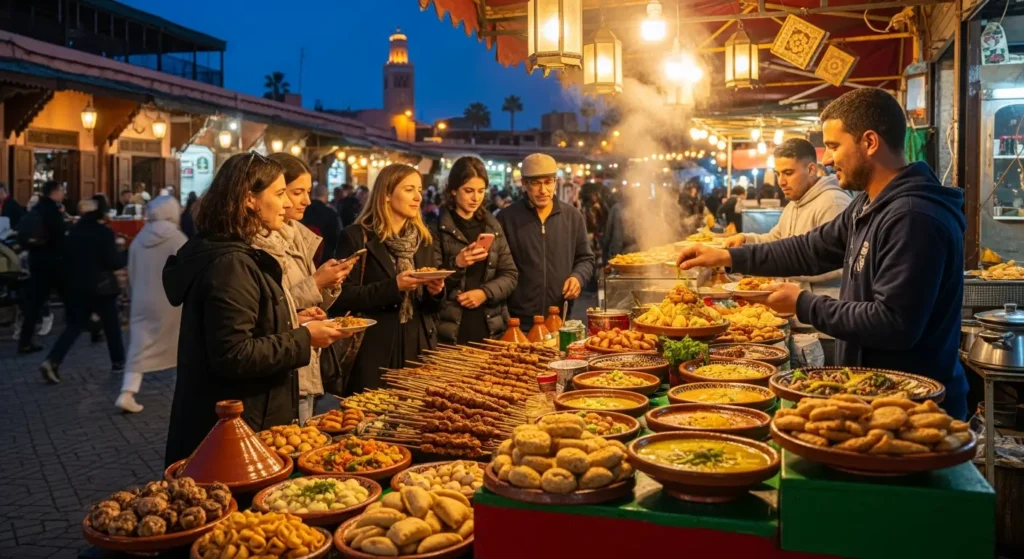
Food-wise, you’ve gotta try the classics: tagine (that slow-cooked stew situation with preserved lemons), couscous on Fridays (it’s tradition), mint tea that’s served everywhere as a sign of hospitality, and pastilla if you can find it—it’s this sweet-and-savory pie that’ll blow your mind.
Getting around isn’t too hard. There are decent trains between big cities like Casablanca, Marrakech, and Fes. Buses will get you to smaller towns. For desert trips and mountain roads, you’ll want a private driver who can also play tour guide and translate if needed.
Staying Connected Across the Kingdom
Nobody wants to be lost in a medina with no GPS, right? Grab a local eSIM or SIM card when you land. Coverage is solid in cities and getting better in rural areas. You’ll want it for navigation, translating, and posting all those photos that’ll make your friends jealous.
Conclusion
The morocco flag is way more than just a national symbol—it’s a living link to centuries of history, deep faith, and hard-won freedom. That crimson background screams courage and sacrifice, while the green star announces Islamic identity and unity through the Five Pillars. From the precise math that went into designing it to seeing it everywhere in daily Moroccan life, this flag represents a country that honors where it came from while totally embracing where it’s going.
Whether you’re into the flag’s symbolism, Morocco’s incredible architecture, the food scene, or just meeting amazing people, nothing beats experiencing it yourself. So yeah, book that trip to Morocco and see why that red flag green star morocco flies so proudly over one of the most captivating places on Earth. You won’t regret it.